 Cheongdam · Seoul clinic
BLS Clinic Main Branch
BLS Main Branch offers lifting, laser treatment, skin boosters, hair removal and facial volume procedures at its Dosan-daero location. The breadth of its menu makes a…
Explore clinic ↗Promoted
Why flat marks, melasma and changes in skin texture need different conversations before you choose treatment in Seoul.
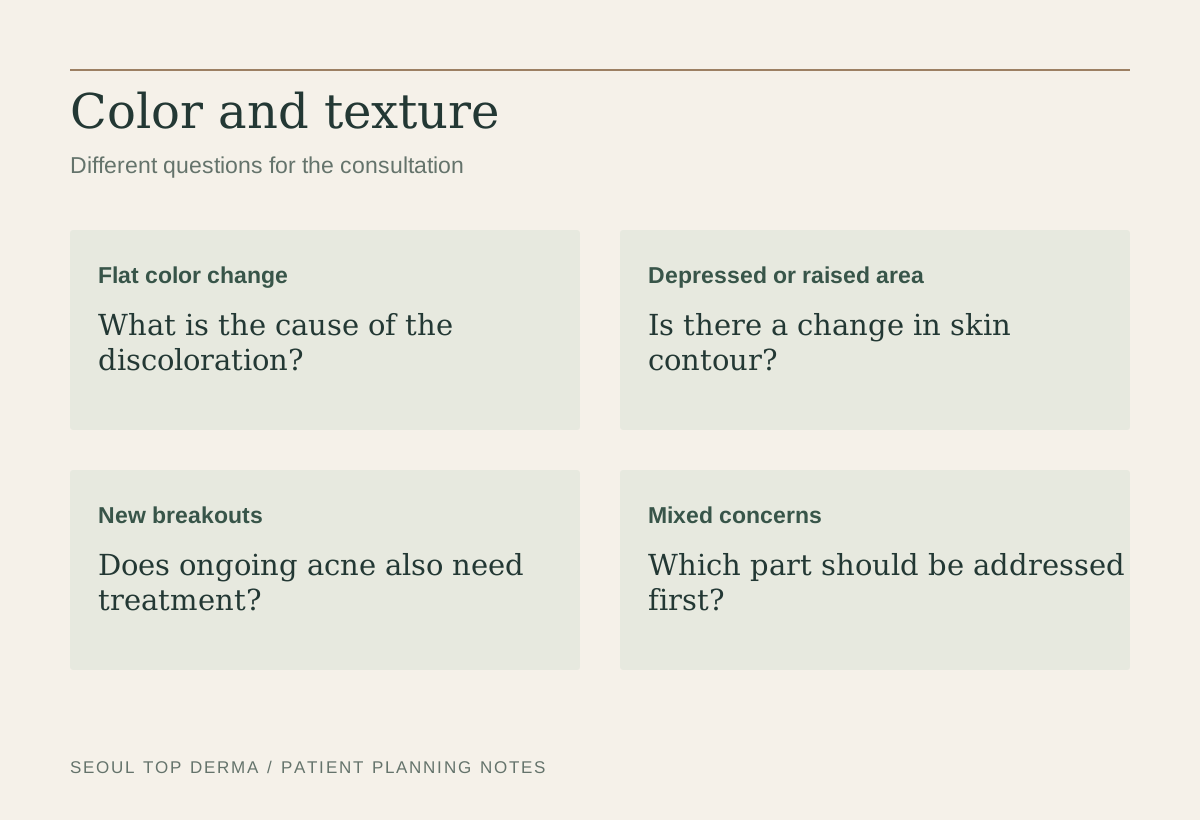
A flat area of discoloration after acne is different from a depression or raised scar. Both can be visible at the same time, and both may bother you, but they do not necessarily respond to the same approach. Before booking a laser package in Seoul, ask a clinician to identify what you are seeing. The aim is to understand which part of the concern is color, which is texture, and whether active acne or another condition also needs care.
This distinction is useful even if you cannot name the problem yourself. You can describe when it began, whether it followed a breakout, whether the surface feels different and whether it changes over time. Bring photographs showing its history if you have them. An online description can help organize a consultation, but it cannot confirm a diagnosis or tell you which device setting, medicine or procedure is suitable for your skin.
Start with plain observations. Is the area darker, lighter, redder or simply uneven in texture? Does it appear flat in ordinary light, or do shadows make an indentation more noticeable? Has it stayed in the same place, or do new marks appear after new breakouts? These questions are not a home diagnostic test. They give the clinician a clearer history and reduce the chance that a broad phrase such as acne marks is interpreted differently by you and the clinic.
Be specific about your priority. If you are mainly concerned about flat discoloration, a plan aimed at deep textural scars may not address what you most want to change. Conversely, fading color may leave a depression visible. Ask the clinician to point out the different components and describe which one each recommended treatment targets. This also helps you understand why a staged plan may make more sense than treating every visible difference at once.
The American Academy of Dermatology distinguishes flat color changes after acne from true scars. Scars can alter the contour of the skin, including depressed or raised areas. Their appearance may vary with lighting, and more than one scar type can occur on the same face. A consultation should therefore assess individual areas rather than assigning every mark to a single treatment category.
For your own comparison notes, record the clinician's description of the scar pattern and the concern they propose to address first. Ask what improvement would look like under ordinary lighting and whether color and texture will be reviewed separately. A photograph taken immediately after a procedure may reflect swelling or a temporary surface change rather than the final result. Agree on the timing and conditions for progress photographs so you have a more useful basis for comparison later.
If new breakouts continue, tell the clinician even when old marks are your main concern. The plan may need to address ongoing acne alongside or before treatment of its effects. Otherwise, you could spend time improving old marks while new ones continue to appear. Ask what the proposed approach does for current acne, what it does for discoloration, and what it does for established scars. Those are related but different goals.
Bring your acne treatment history, including how long you used each medicine and why you stopped. A product that irritated your skin, a prescription that helped only while you used it, and a treatment you could not continue because of cost are different experiences. Avoid describing all of them simply as treatments that failed. A clear history gives the clinician more useful information without requiring you to choose the next prescription yourself.
Melasma can resemble other pigmentation problems, so a diagnosis matters before deciding on a procedure. The American Academy of Dermatology describes examination as the starting point and notes that a clinician may use additional assessment when another condition needs to be ruled out. A photograph of uneven color alone is not enough reason to assume that laser toning is the right first step.
If melasma is diagnosed, ask how the plan addresses ongoing management, not just the next appointment. Clarify what the proposed procedure adds to other measures and what recurrence would mean for follow-up. Avoid treating a promise of permanent removal as a substitute for this discussion. Tell the clinician about pregnancy, hormonal medicines and other relevant history, and ask how these affect the options. Do not stop prescribed treatment or change hormonal medication based on a cosmetic plan without appropriate medical advice.
Topical treatment, procedures directed at pigment, and treatments aimed at remodeling scars are different categories of care. A clinician may recommend more than one, but each should have a defined role. Ask for an explanation in terms of your concern: which change is this intended to improve, what evidence supports that use, and what would make another option preferable? A brand name alone does not answer those questions.
The AAD describes individualized treatment for acne scars, and Mayo Clinic notes that no single scar treatment is best for everyone. Depending on the assessment, clinicians may consider procedures such as resurfacing, microneedling, injections or scar-directed techniques. These examples are a discussion map, not a recommendation to combine them. Ask what can realistically improve, what may remain visible, and whether the proposed plan has been chosen for your scar pattern rather than simply because the clinic owns a particular device.
A treatment intended to improve a visible concern can also cause unwanted changes. Discuss your skin tone, past reactions, tanning history and any tendency to develop lasting discoloration after inflammation. DermNet's guidance on laser therapy in skin of colour describes the importance of careful treatment selection. Do not interpret the availability of a device as proof that every procedure using it has the same risk for every patient.
Ask how the clinician will reduce risks in your case, whether a test area or staged approach is appropriate, and what they would do if your skin reacts unexpectedly. Ask about the difference between expected short-term redness and changes that need review. A clinician should provide procedure-specific advice; an all-purpose promise of no downtime is not enough to decide whether the plan fits your health needs, work or travel schedule.
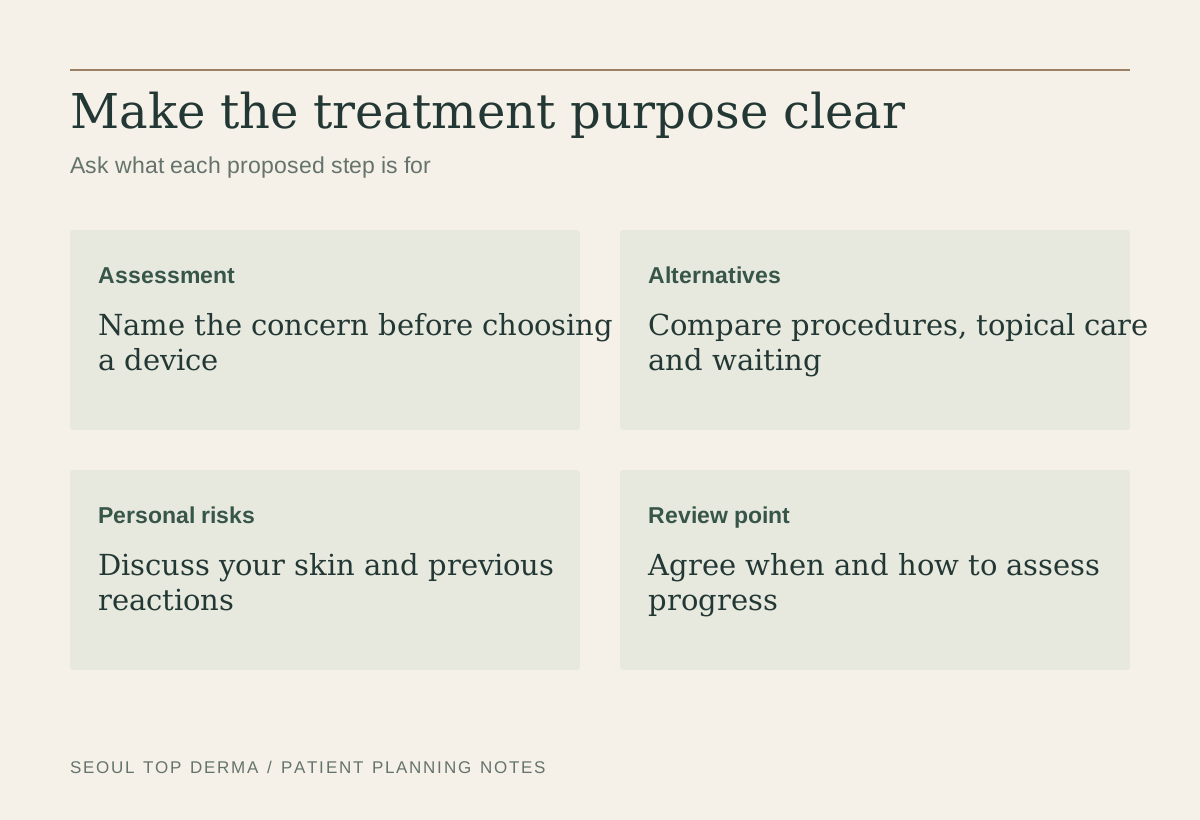
When there are several concerns, ask what should happen first and why. An initial plan might focus on assessment, control of active disease or a simpler treatment before adding a procedure. You should understand what the clinician wants to learn from the first step and how the next decision will be made. A sequence with review points is easier to evaluate than a fixed package that promises to address every mark regardless of response.
Ask what would count as sufficient improvement to continue, what would trigger a change in plan, and whether there is a sensible stopping point. The answer need not be a numerical percentage. It might be a documented change in texture, fewer new lesions, or greater comfort with the appearance of an area. Set a goal that relates to your concern and accepts that complete removal of every visible mark may not be achievable.
If you choose to track your skin, use similar lighting, distance and camera settings each time. Avoid filters or beauty modes. Include an overall view and a closer view of the area that concerns you, and record the date. This is a practical way to reduce misleading comparisons, not a replacement for a clinical examination. Ask the clinic how to share photographs securely and whether it has specific instructions for remote updates.
Do not judge yourself against a different patient's result or a social media close-up. Their diagnosis, skin characteristics, procedures and photography may differ from yours. At consultation, ask whether example images show the same type of concern and how long after treatment they were taken. You can value a provider's examples while still recognizing that they cannot establish your likely result. Keep attention on the explanation of your own assessment.
Ask which parts of the proposed course can be completed during your stay in Seoul and which require later review. If you live locally, discuss the practical interval between visits and the time needed for aftercare. If you are visiting, explain whether you can return and whether another clinician will be available near home. Do not purchase a course until you understand the schedule and what happens if the first treatment changes the plan.
Get written instructions for skincare, sun protection and the return to your usual products or activities. The AAD's aftercare guidance emphasizes following the instructions supplied for the actual scar treatment. Avoid adding stronger exfoliants or new products because the improvement seems slow. Ask when results should be assessed and when a symptom should prompt review. More treatment, sooner, is not automatically a better response to uncertainty.
BLS Clinic Main Branch lists PICO toning among its services and names Dr. Yi Dong-jin in its doctor directory. That makes the clinic a relevant place to ask about an assessment of pigmentation and the role, if any, of a pigment-directed procedure. It does not establish that PICO toning is suitable for every dark mark or that one procedure will address both color and scar texture. Use the consultation to clarify the diagnosis and the actual objective.
Seongsu Melting Clinic lists skin care, acne treatment and laser services, with Dr. Kyongmin Park identified as a family medicine specialist. It is another listed option for discussing active acne and an aesthetic skin concern. Ask which clinician and service are appropriate, and whether specialist dermatology assessment is needed. Both clinics hold PB plans in the supplied list; their commercial placement is separate from clinical suitability. Review their international sites and individual profiles before arranging an appointment.
Ask the clinician to name the different concerns they see and explain which one is most important to address first. Ask which proposed treatment targets color and which targets texture, how active acne changes the plan, and what alternatives include topical care or waiting. Ask what risks are most relevant to your skin and how the plan would change if you cannot attend multiple sessions. These questions help you compare explanations rather than marketing vocabulary.
Leave with a written summary of the assessment, the purpose of each proposed step, expected follow-up and the full quote. You do not need to decide during the first conversation. When the distinction between pigmentation and scars is clear, it becomes easier to choose an appropriate next step, understand what improvement might mean and avoid paying for a treatment aimed at a different problem from the one you want help with.
Sources checked 26 October 2026. This guide is editorial information, not a personal diagnosis or an independent clinical review.
 Cheongdam · Seoul clinic
BLS Main Branch offers lifting, laser treatment, skin boosters, hair removal and facial volume procedures at its Dosan-daero location. The breadth of its menu makes a…
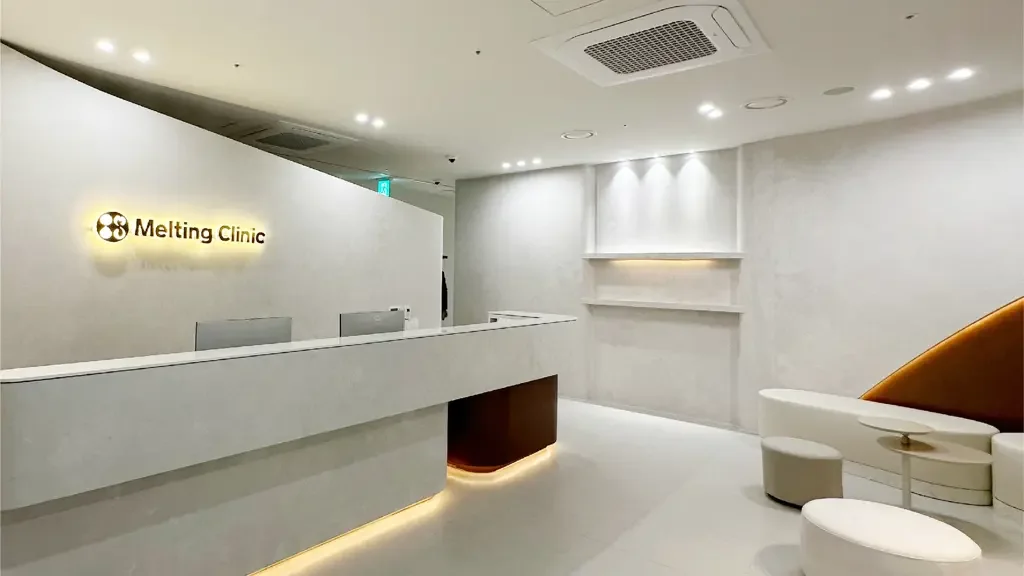 Seongsu · Seoul clinic
Seongsu Melting offers acne and skin-care programs, laser treatments, lifting and injectable aesthetics at 113 Achasan-ro. Dr. Kyongmin Park is the named clinic leader. This…
Promoted PB and Scaleup listings rotate first among relevant clinics. Placement is not a clinical ranking.